 Русский
  English
  Deutsch
  Español
  العربية
  中文
中文  Türkçe
  Français
  Italiano
  Prof. Dr. med. Arsen Babayan
Germany is a world leader in orthopedics and spinal surgery. Every year, more than 250,000 foreign patients come here for treatment of musculoskeletal disorders. We break down how to organize spine treatment in Germany step by step.
Why Germany?
- #1 in Europe in number of orthopedic clinics and quality of medicine
- Strict certification — Facharzt system guarantees at least 6 years of specialization
- Advanced technologies — regenerative medicine, robotic surgery, 3D navigation
- Transparency — mandatory publication of complication statistics
- Logistics — center of Europe, direct flights from all major cities worldwide
Spine Conditions Treated in Germany
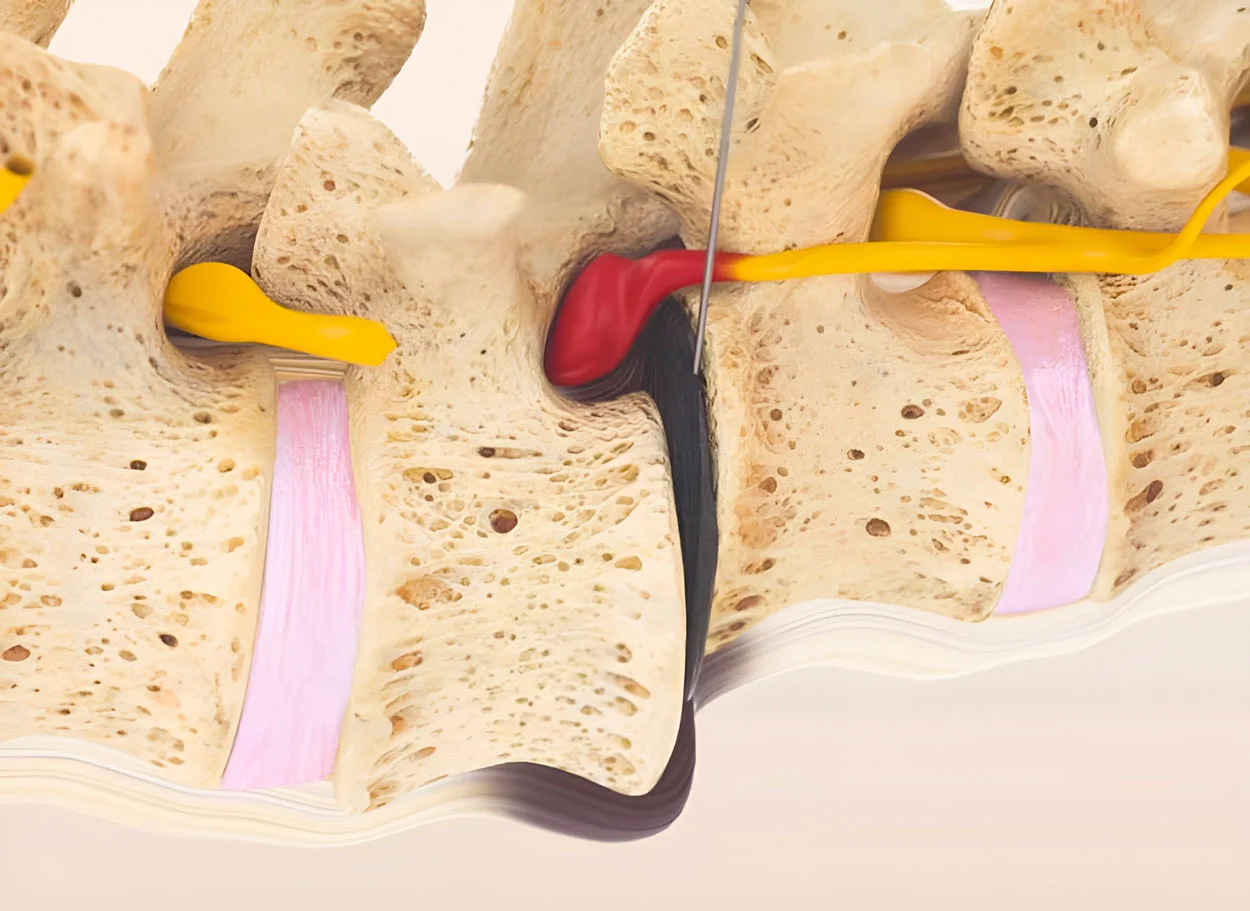
- Herniated Discs — from conservative to regenerative treatment
- Spinal Stenosis — decompression, laminectomy, MIBRAR®
- Spondylolisthesis — stabilization or regenerative approach
- Sciatica — diagnosis of cause and targeted treatment
- Osteochondrosis — comprehensive therapy
- Scoliosis — correction in children and adults
- Spine tumors — neurosurgery
Treatment Methods: From Classic to Regenerative Medicine
Conservative
Physical therapy, manual therapy, epidural blocks, medication therapy. In Germany, the protocol is: surgery is considered only after 6–12 weeks of conservative treatment (except emergencies).
Minimally Invasive Surgery
Microdiscectomy, endoscopic decompression, TLIF/PLIF. Incisions 1–3 cm, hospitalization 2–5 days.
Regenerative Medicine
MIBRAR® method — non-surgical treatment using autologous concentrates (CGF + Lipogems®). Outpatient procedure, without general anesthesia, rehabilitation 2–4 weeks. Effective for herniations up to 15 mm, stenosis, facet joint osteoarthritis.
How to Organize Treatment: Step-by-Step Plan
Step 1: Remote Consultation
Send MRI images (on disc or in DICOM format) and medical discharge summary. The doctor will review the images and propose a treatment plan. Most clinics provide free evaluation.
Step 2: Obtaining Invitation and Visa
The clinic issues an invitation for a medical visa (type C or D). Processing time: 2–4 weeks. Documents: passport, invitation, proof of payment/insurance.
Step 3: Arrival and Diagnostics
On the first day — in-person consultation, additional diagnostics if necessary (MRI on high-field 3T scanner, CT, laboratory tests).
Step 4: Treatment
Depending on the method: outpatient procedure (MIBRAR® — 1 day) or inpatient (surgery — 2–5 days).
Step 5: Rehabilitation and Follow-up
After the procedure — rehabilitation protocol. Follow-up examination in 1–3 days. Follow-up MRI in 8–16 weeks (can be done at home and sent remotely).
Munich: Why This City
Munich — medical capital of Germany:
- LMU University Hospital — top-5 in the world in orthopedics
- Over 200 orthopedic practices in the region
- MUC Airport — direct flights from 250+ cities
- Russian-speaking medical coordinators
What to Bring
- MRI images on disc (not older than 3 months)
- Medical discharge summaries (translated to German or English)
- List of current medications
- Comfortable clothing and shoes for rehabilitation
- Passport and medical insurance
Frequently Asked Questions
Is Insurance Required?
Recommended. Some clinics accept direct payment, others accept international insurances (Allianz Care, Cigna, Bupa).
How Long to Stay in Germany?
For outpatient procedures (MIBRAR®): 3–5 days. For surgeries: 7–14 days including rehabilitation.
Do I Need to Speak German?
No. Most specialized clinics have medical coordinators speaking Russian, English, Arabic, and other languages.


